There is a particular kind of institutional courage involved in deciding to invent something that does not exist yet, in a market that has not asked for it, in a country where the category of product you are building has no precedent, no comparable IP, and no established commercial pathway. It is the kind of decision that looks obvious in retrospect and enormously risky at the time. When Pentasafe Training Academy began the journey that would eventually result in more than ten filed patents for original safety simulator inventions, it was not following a global template or localising a foreign concept. It was doing something genuinely new.
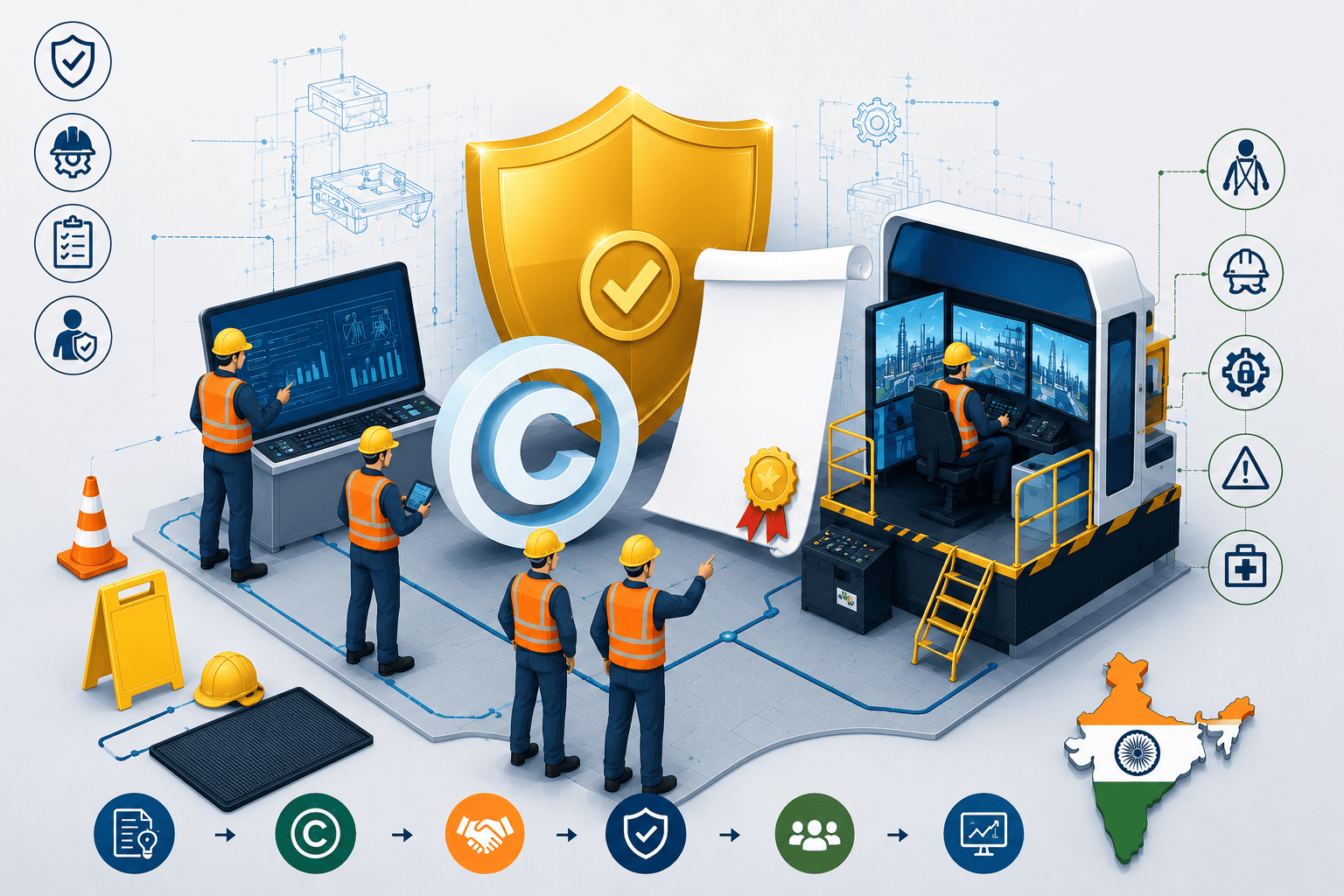
The result is a landmark in the country's industrial safety history: Pentasafe is now India's first and only holder of patents for safety experience centre simulators, and the implications of that distinction extend far beyond a single organisation's portfolio.
The Problem That Made Invention Necessary
Every invention begins with a problem that existing solutions fail to solve. For Pentasafe, the problem was one they encountered continuously in their work delivering safety training to industrial clients across India: the fundamental inadequacy of passive instruction as a method for building genuine safety competency. Workers could be told about the physics of a fall from height. They could watch videos of confined space rescues. They could sit through presentations about the consequences of inadequate energy isolation. None of it produced the deep, embodied, retention-grade learning that the stakes of industrial safety demanded.
Immersive, experiential safety training was the answer — but the equipment and simulators needed to deliver it at the standards Pentasafe envisioned simply did not exist in any form that could be sourced, licensed, or adapted from the global market. What was available was either designed for different safety contexts, built for different regulatory environments, or prohibitively expensive to import and maintain. If Pentasafe was going to build a safety training experience that matched their vision, they were going to have to build the tools themselves.
What Innovation Looks Like in Practice
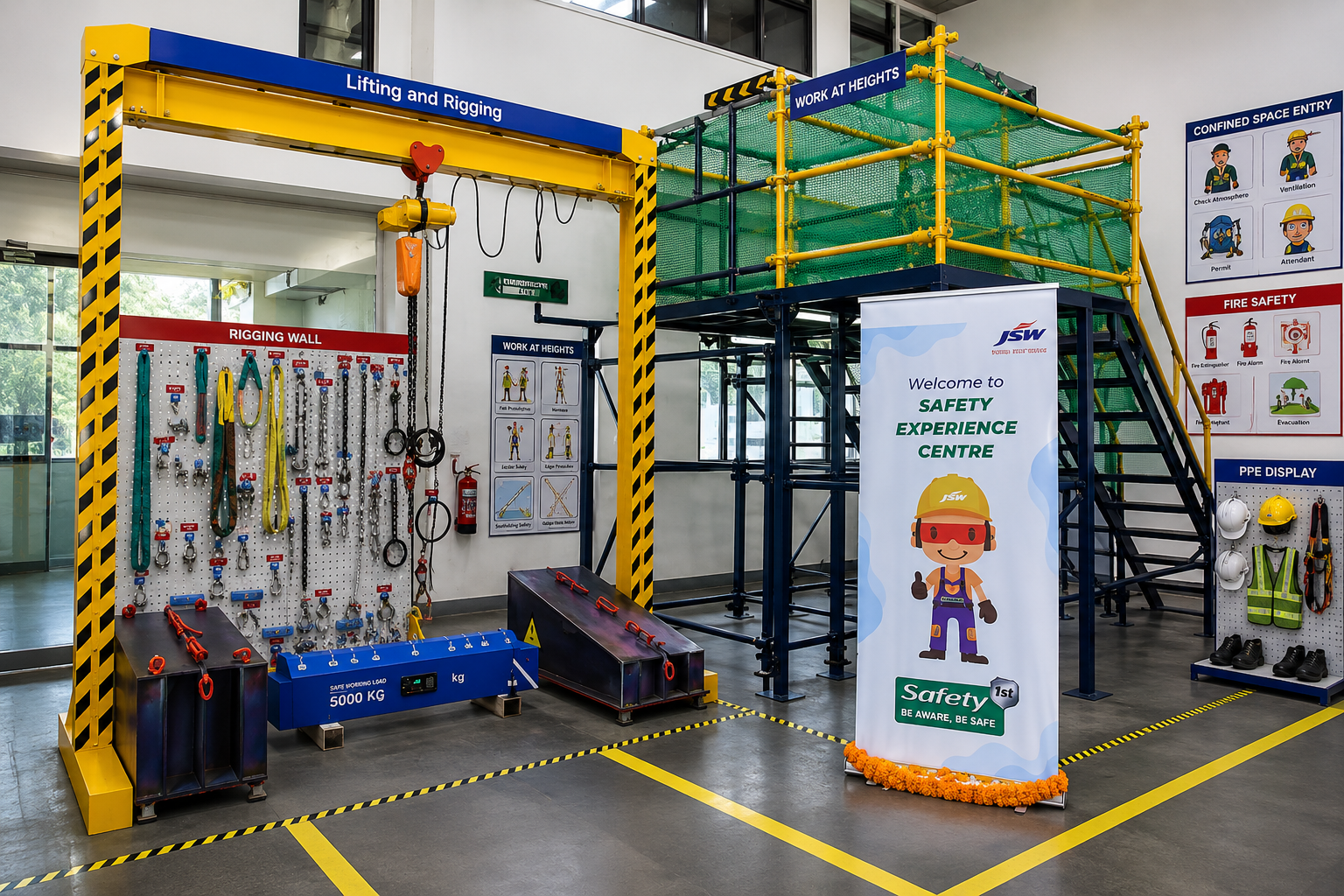
Each of Pentasafe's patented inventions emerged from an iterative process of designing something, building a prototype, testing it against real training scenarios with real workers, identifying what works and what fails, redesigning, rebuilding, and testing again. The simulators Pentasafe developed span the critical hazard categories of industrial safety — and in each case they were designed not merely to demonstrate a hazard but to place the trainee in a realistic physical encounter with it:
- A height simulator that genuinely activates the body's instinctive response to elevation
- A confined space entry system that replicates the sensory environment of a real vessel entry
- Rescue extraction mechanisms that require trainees to develop actual muscle memory
- Energy isolation training systems that teach the physics of stored energy, not just the procedure
- Fire response simulators calibrated for the specific conditions of Indian industrial environments
Why This Matters Beyond One Organisation
For the industrial safety training sector in India, Pentasafe's patent portfolio establishes a proof of concept that has never existed before: that original, world-class safety training innovation can be conceived, developed, and protected within India, by an Indian organisation, without reference to imported frameworks or licensed foreign technology. This is not a minor achievement in a sector that has historically looked outward for its standards and its tools. It is a reorientation — a demonstration that the expertise required to define what safety training should look like in an Indian industrial context exists within the country and is now formally protected as Indian intellectual property.
For India's broader industrial safety ecosystem, the emergence of patented safety simulator IP signals the beginning of a new chapter. When a country's safety training organisations begin generating and protecting original IP, the discipline matures. Standards rise because they are no longer entirely dependent on regulatory mandates — they begin to be driven by competitive innovation. Other players in the market are challenged to innovate rather than imitate. The overall quality of what is available to industrial employers improves. Workers benefit from training that is continuously evolving rather than static.
More than ten patents represents years of development, testing, refinement, and formal documentation. It represents a commitment to doing the difficult, expensive, time-consuming work of formal IP protection. Pentasafe's patent portfolio is not a destination. It is a foundation — the formally protected base from which India's most innovative safety training organisation will continue to build, invent, and raise the standard of what it means to genuinely protect the people who build and run the country's industrial infrastructure.
India's first safety simulator IP is here. And it was made in India, for India, by the people who understood most clearly what India's workers needed.