Numbers tell stories. In industrial safety, they tell stories that are uncomfortable to sit with — stories of families that received phone calls instead of their workers coming home, of injuries that permanently altered the trajectory of a person's life, of incidents that were statistically predictable and operationally preventable. The latest data on India's industrial accident landscape demands to be read with that human weight in mind. Because behind every figure is a decision that was made — or not made — about how much a worker's safety was worth.
The Scale of the Problem
The headline statistics are stark. By December 2024, IndustriALL documented at least 240 workplace accidents in India's manufacturing, mining, and energy sectors, resulting in over 400 fatalities and more than 850 serious injuries — and those figures are acknowledged to be significantly understated, given that workplace accidents in India remain substantially underreported.
According to DGFASLI, a total of 32,413 accidents were reported across various industries in 2020, resulting in 1,050 fatalities and 3,882 injuries — an average of nearly three factory fatalities every single day. Between 2017 and 2020, India reported an average of 1,109 deaths and more than 4,000 injuries in registered factories each year, with a fatality rate estimated at 11.4 deaths per 100,000 workers.
Among Nifty 500 companies alone, total fatalities stood at 463 in FY23 — more than one death per day — while workplace injuries rose to 10,733, with high-consequence injuries increasing by 33 percent to 907 incidents. These are numbers drawn from organisations with dedicated safety teams, BRSR reporting obligations, and international investor scrutiny. What they suggest about the broader, less visible industrial landscape is sobering.
Where the Incidents Are Concentrated
The data points clearly to the sectors and circumstances where risk is highest. The chemical and pharmaceutical sectors saw some of the most severe accidents in 2024, with over 110 workplace accidents resulting in at least 220 worker deaths and more than 550 serious injuries. Manufacturing, construction, mining, and energy generation consistently appear at the top of fatality frequency tables across all reporting frameworks.
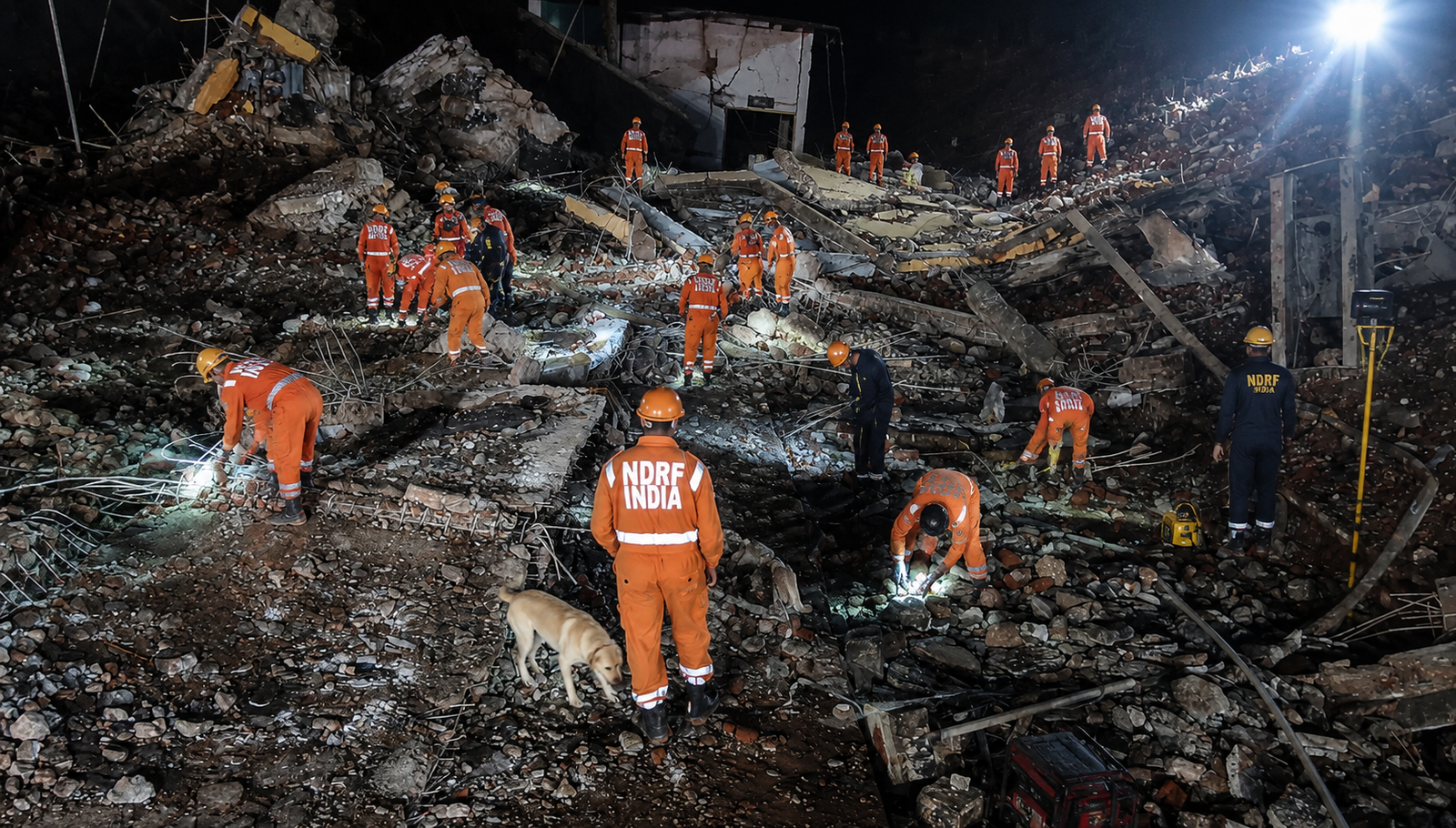
A federal minister confirmed to Parliament that at least 6,500 workers died in factories, ports, mines, and construction sites over a five-year period — with labour activists noting that the actual figures are likely higher due to widespread underreporting. The most recent and catastrophic example came in April 2026: an explosion at a power plant in Chhattisgarh killed 24 workers who had travelled from West Bengal, Jharkhand, Uttar Pradesh, Bihar, and Madhya Pradesh, their presence mapping the contours of India's migrant labour economy.
The Structural Problems Beneath the Numbers
Raw incident counts do not fully communicate the structural conditions that produce them. India has significant structural issues in occupational safety and health — laws and regulations are not consistently enforced and do not fully cover all industries and employment types, creating loopholes that expose workers in informal sectors to hazardous conditions without adequate legal protection.
The corporate governance dimension compounds this. An IiAS analysis noted that safety and welfare of workers on factory floors are rarely matters of concern for boards and top management, whose pay structures continue to reflect a focus on the bottom line. This observation identifies the upstream cause of most downstream incidents: safety is treated as a compliance cost rather than a strategic commitment, and the incentive structures that govern executive behaviour do not adequately price the human and institutional consequences of getting it wrong.
What Is Improving — and What Remains Insufficient
There are genuine signals of progress. Fatalities among Nifty 500 companies fell from 587 in FY22 to 463 in FY23 — a 21 percent reduction that reflects real improvement in the most visible segment of the market. BRSR reporting requirements are forcing large organisations to measure and disclose safety data that was previously invisible. But improvement in the most visible segment of the economy is insufficient as a measure of national progress when the majority of India's industrial workforce operates in conditions of far lower visibility and accountability.
What Forward-Thinking Companies Are Doing Differently
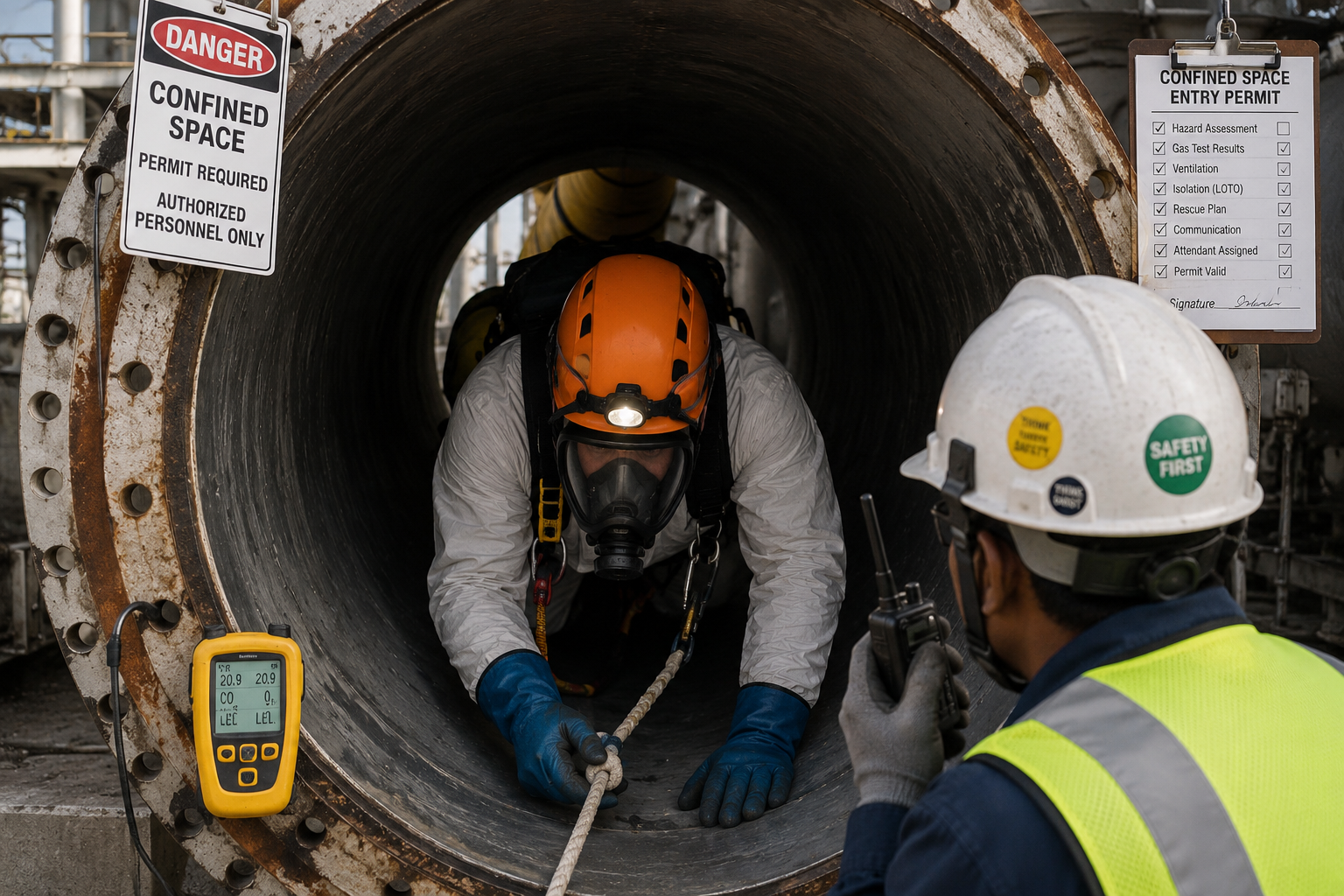
The organisations genuinely moving the needle on safety outcomes share recognisable characteristics. They invest in training that builds real competency rather than generating compliance certificates. They deploy structured energy isolation, confined space, and height safety programmes delivered by credible, accredited providers. They build on-site emergency response capability rather than assuming external responders will arrive in time. And critically, they create accountability structures that connect executive performance evaluation to safety outcomes.
The statistics India produces year after year are not evidence of an unavoidable cost of industrial growth. They are evidence of choices that have been made about whose lives are worth protecting. The numbers will not change until the decisions do.